Best Sight Seeings:

Showing posts with label Norway. Show all posts

Sunday, March 22, 2009

Svalbard Midway of Europe and North Pole


The name Svalbard means "cold coasts" and was first mention in Icelandic texts in the twelfth century. The Svalbard Islands offer great, wild nature, old mines and polar bears. The islands are located between 74° - 81° N and 10° - 35° E. They constitute of 63,000 square kilometres.
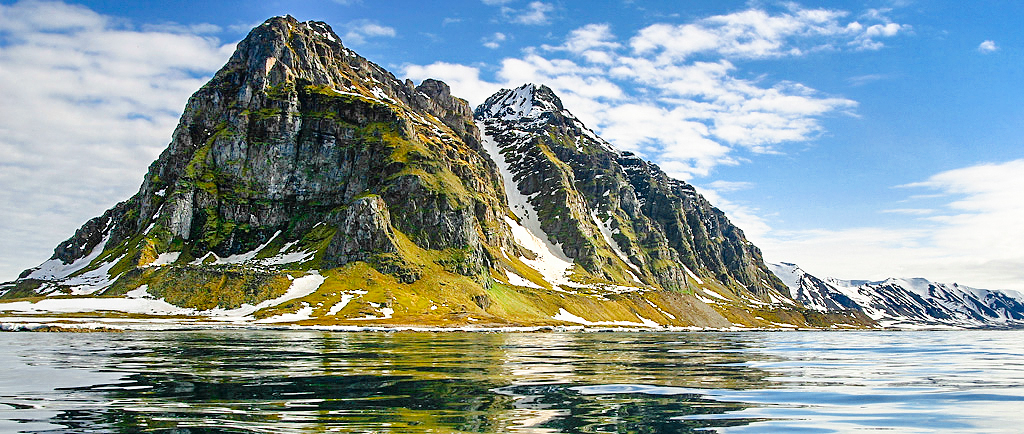
File:Prins-karls-forrland pho.jpg

Nearly 65 per cent of the surface of Svalbard consists of protected areas, including 3 nature reserves, 6 national parks, 15 bird sanctuaries and 1 geotopical protected area. Norway's largest glacier, Austfonna, lies on Svalbard. Austfonna is the world's third-largest icecap after Antarctic and Greenland with a glacier front of 200 kilometres. The largest islands are Spitsbergen, Nordaustlandet, Barentsøya, Edgeøya and Prins Karls Forland.

History

  • 1596: Willem Barentsz discovers Svalbard
  • 1600 - 1750: International whaling activities
  • 1800 - 1900: Norwegian all-winter hunting and trapping
  • 1906: John M. Longyear establishes the first mine
  • 1920: The Svalbard Treaty is signed
  • 1925: Norway is given sovereignty over Svalbard

Towns/settlements on Svalbard

http://images.discositdown.com/bimages/svalbard2.jpg

Longyearbyen has 2,075 inhabitants. This is the seat of local government and Norway’s main administrative centre on Svalbard. The small colourful community has developed from being a typical village town into a modern community with different kinds of businesses and industries, and with a wide range of cultural activities and opportunities.

Summer and autumn activities

During summer and autumn, hiking can be combined with boat trips and cruises. The experience of the Svalbard summer is highlighted under lively bird cliffs or when you pitch your tent in a landscape surrounded by mountain peaks and glaciers. Svalbard is also worth experiencing from a kayak, watching a seal basking on a nearby sheet of ice.

Winter activities

The winter season offers opportunities for combining for example longer skiing trips with snowmobile safaris or dog sledging.

To ascend Svalbard’s highest peaks by the use of skis may be a dream for some, whilst others prefer to explore the winter wonderland by dog teams or snowmobiles.

Many activities are only available during certain seasons. Dog sledging, snowmobile safaris and skiing are usually possible from December to the last part of May. However, in some areas these activities may be offered during the summer as well.

Boating season

The boating season normally starts at the beginning of June and lasts to the first half of September.

Other activities


At the gallery in Longyearbyen you can see the Svalbard collection of old maps and books, a slide show from the photographer and composer Thomas Widerberg, and an exhibition of Kåre Tveter’s paintings. From time to time there are also sales exhibitions.

http://upload.wikimedia.org/wikipedia/commons/thumb/7/70/Svalbard6.jpg/450px-Svalbard6.jpg

The Longyearbyen Church is open for visitors every day and there is a service nearly every Sunday. Every Tuesday evening, the church is sells coffee and Norwegian waffles. Here you get to know Longyearbyen and the people better.

The Svalbard Museum in Longyearbyen offers various exhibitions of flora, fauna, coal mining, hunting history and Svalbard during World War II. Through the museum you may also get sightseeing at the funicular centre, where you can see how the coal was transported earlier.

The cable trestles are cultural monuments over the manual driven coal mining in Longyearbyen. At that time, the coal was transported in "kibs" (carriers) on the cable way to the cleaning plant.

Some of the entrances to the closed mines are worth a visit. The entrance of "Mine no. 2b" is highly recommended. As a matter of fact, this mine is where Santa Claus lives.

Organised events

Some of the organised events require a minimum number of participants. With Longyearbyen as a starting point, these are some of the activities on offer:

  • Barbeque evenings
  • Boat trips
  • Dog sledging
  • Fossil hunting
  • Glacier walks
  • Hikes
  • Riding
  • Ice caving,
  • Kayak trips
  • Mine visit
  • Sightseeing
  • Skiing trips,
  • Snowmobile safaris
  • Weasel trips
  • Wilderness camps

Infrastructure

There is no regular boat transportation between the Norwegian mainland and Svalbard. The easiest way of getting to Svalbard is by taking a plane. Most of the year, there are daily flights from Oslo directly to Longyearbyen or via Tromsø. The islands' airport is Svalbard Lufthavn Longyear. There are no roads between the settlements.


Safety

http://www.allamericanpatriots.com/files/images/polar-bear-svalbard-norway.jpg

Friday, March 20, 2009

Bergen, one of european cultural city

http://www.clioh.net/plenmeet/bergen/Bergen.jpg

Bergen gets a lot of play because it is a good place to start a tour of Norway's Fjord Country. Bergen's inner harbor and "Old Town" are pleasant, the town has a long and interesting history, which is well represented in local museums. From Bergen, you can travel by bus and train through part of Fjord Country and doing so is worth the effort, as the scenery is some of the most beautiful in the world (the fjords are best seen from the water). Finally, you might consider a more formal cruise of the fjords since a cruise is a wonderful and relaxing way to see Fjord Country.

City
The city centre of Bergen is located west in the municipality, facing the fjord of Byfjorden. It is situated among a group of mountains known as the Seven Mountains, although the number is a matter of definition. From here, the urban area of Bergen extends to the north, west and south, and to its east is a large mountain massif. Outside of the city centre and the surrounding neighbourhoods (i.e. Årstad, inner Laksevåg and Sandviken), the majority of the population lives in relatively sparsely populated residential areas that have been built since the 1950s. While some are dominated by apartment buildings and modern terraced houses (e.g. Fyllingsdalen), others are dominated by single-family homes.

Visits Site
Bergens-Expressen
1-hour guided tour on the sightseeing train "Bergens-Expressen". The tour takes us through the central streets of Bergen, past the Fish Market, along the harbour and the Hanseatic Wharf Bryggen. Drive up to Mount Fløien, to enjoy a view of Bergen.

Harbour tour by boat - MS White Lady
We take you on a tour through Bergen's characteristic harbour area, and you get a good view of Old Bergen Museum and the Aquarium.

Historical City Walk
Bryggen, a symbol of our cultural heritage.

Bergen Guide Service - City Walks
Exciting and informative city walks that a
llow you to experience both unknown and historically significant aspects of Bergen. Duration approximately 1 1/2 hours, especially designed for individuals travellers.

Vinje Skulpturvandring
Get to know Norwegian artists, local and national history and culture through sculptures on an art historical walk in downtown Bergen. Meet Vigeland, Ibsen, Grieg, Ole Bull, modernist pieces etc. Weekends all year at 11 am. From May-Sept also at 6 pm Mon-Fri. Tickets at the Tourist Information.

Sightseeing
We show you where the attractions are and tell you about shopping and restaurants. Our experienced guides answer questions and give you good advice and tips on how to make the most out of your stay in Bergen.


Culture
Bergen is a vital centre in its region and in Norway, maybe best known for hosting the annual Bergen International Festival (Festspillene i Bergen). The city is home to the Bergen Philharmonic Orchestra, which was founded in 1765 and is one of the world's oldest orchestral institutions. The orchestra performs regularly at the 1,500 seat Grieg Hall. The city is also home of the Bergen Woodwind Quintet, which is made up primarily of principal winds of the Bergen Philharmonic. Bergen was a European Capital of Culture in 2000. Other main cultural events include Borealis, Nattjazz, Lost Weekend Festivalen and Bergenfest (formerly Ole Blues). There are numerous amateur bands in Bergen and the surrounding communities, performing regularly throughout the city. They generally fall within two distinct categories: brass bands, following the British band tradition, and Janitsjar or wind bands, which include both woodwind and brass instruments. Both of these types of bands tend to be quite competitive, and the Grieg Hall in Bergen is home to the annual Norwegian Brass Band Championships, which takes place in late winter.


Transportation
Air
Bergen has an international airport, Bergen Airport, Flesland, with direct flights to several European cities. The Bergensbanen railway line runs east to Voss, Geilo, Hønefoss and Oslo.

Road
The E39 road passes through the city, connecting to Trondheim and Stavanger. The E16 road to Oslo passes through the Lærdalstunnelen, the longest road tunnel in the world. Bergen was the first city in Northern Europe to introduce a ring of toll roads entirely surrounding the city, making entering the city centre by car impossible without paying the toll. The toll road system, established to fund new roads and motorways, opened 2 January 1986. The toll was collected by both toll plazas and an electronic toll collection system. In the early 2000s, the electronic toll collection system AutoPASS was introduced, replacing both the remaining toll plazas and the existing but dated electronic toll collection system.

Public Transport
It is provided by the transportation company Tide, the result of a merger between Gaia and HSD. Among the fleet of buses are 8 trolleybuses (two of which are dual-mode buses). Local train transport to Arna is provided by Norges Statsbaner. There is a funicular (Fløibanen) and an aerial tramway (Ulriksbanen). The city's tram system was closed in 1965, although a museum line still operates on Møhlenpris. The construction of a modern light rail line connecting the city centre with Nesttun and Bergen Airport has been approved by Stortinget and is underway. Express buses go to all larger destinations in Norway.

Sea
The Norwegian coastal steamer service Hurtigruten originates in Bergen, running north to Trondheim, Bodø, Tromsø and Kirkenes. Passenger catamarans run from Bergen south to Haugesund and Stavanger, and north to Sognefjorden and Nordfjord. Car ferries connect to Hanstholm and Hirtshals in Denmark, Lerwick, Scrabster, Tórshavnon the Faroe Islands, and Seyðisfjörður in Iceland. The service from Newcastle in the United Kingdom was cancelled after September 1, 2008.

Google It:

Custom Search